
Keep the Pressure. Elevate the Rally.

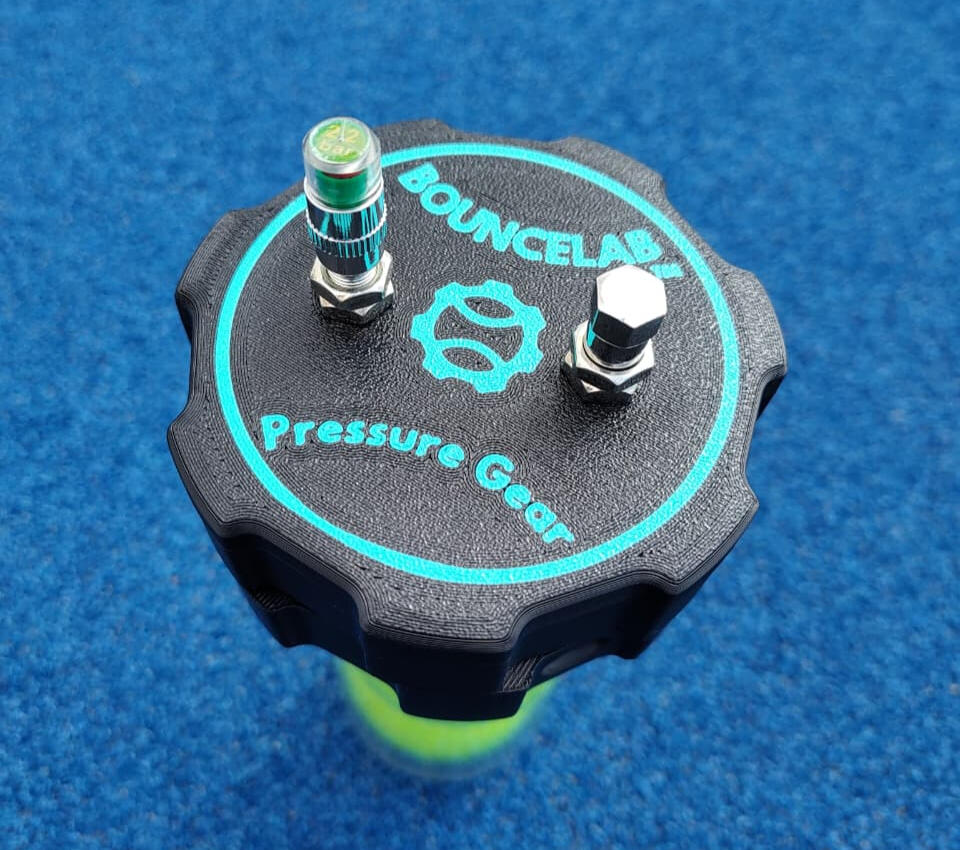
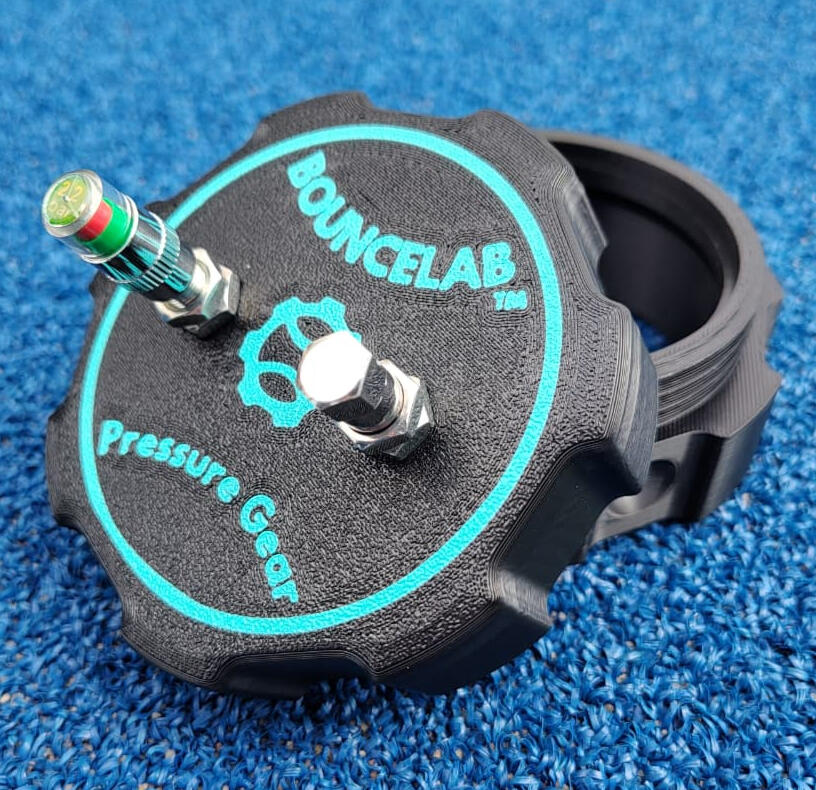
Engineered in South Africa to repressurise tennis and padel balls back to factory specs—saving you money on ball replacements while also helping the environment.

Or find it on Amazon.co.za:
The Problem
* Tennis and padel balls lose optimal internal pressure after just 1 to 2 matches, turning lively balls into slow unbouncing balls that ruin shot consistency and make it difficult to maintain good rallies.
* Replacing balls regularly becomes a costly exercise for regular players
* Additionally, the replaced balls add additional waste to our landfill sites.
Solutions
* The first solution is to change balls regularly.
* If playing two to three times a week, the cost of this can add up quickly.* The alternative is to maintain the pressure in the balls to keep them active for a longer time.
* This is where the Bouncelab Pressure Gear comes in.
* After purchase, if you keep your next set of new balls pressurised and use them for 4 times as long as normal, it would have already paid for itself.
* Imagine your savings after a year!
Core Features and Benefits
* Dual Compatibility: Fits both padel and tennis balls.
* Effortless Inflation: Standard schrader valve for easy inflation.
* Rugged, Built-to-Last Construction: Precision-manufactured housing designed to withstand daily court bag abuse and retain strict pressure sealing.
* Ball Tube Re-use: Designed to be used with existing ball tubes.
Dunlop, Head and Nox tubes have been tested as compatible.

Or find it on Amazon.co.za:
How it Works



Or find it on Amazon.co.za:
The Story Behind the Bouncelab Pressure Gear
Every padel and tennis player knows the frustration: you crack open a brand-new tube, play one solid match, and by the next session, the balls have lost their pop. Within two to three games, you are essentially forced to buy another set or play with dead balls.When looking at the market for ball preservers, two clear problems emerged. The high-end devices on the shelf were imported and heavily overpriced. The budget alternatives only held a meager 14 psi—barely matching atmospheric pressure at sea level and falling far short of what is needed to actively recharge internal ball pressure and maintain true tournament bounce.
Padel and tennis balls need to be stored under approximately 28 to 30 psi (1.9 to 2 bar) between sessions to stop internal air loss and keep their liveliness intact over weeks, not days. Seeing that gap, Bouncelab was founded in South Africa to design a rugged and locally manufactured solution that players can actually afford.The Bouncelab Pressure Gear was engineered to convert the standard ball tube you already own into a true high-pressure storage chamber. Instead of buying an entirely new proprietary canister, our precision-crafted collar and pressure cap lock securely onto compatible ball tubes, forming an airtight seal with a heavy-duty EPDM gasket. A standard Schrader valve allows you to quickly pump the chamber up to the optimal 30 psi using a regular bicycle pump, preserving the factory compression and bounce of your balls between games.By developing and testing the Pressure Gear locally, we cut out import markups while giving players a durable tool that pays for itself after just a few preserved cans. Fresh bounce for every match, less waste heading to landfills, and more value in your bag.
Specifications and Compatibility Guide
REUSABLE PRESSURISER SYSTEM: The BounceLab Pressure Gear helps maintain ball pressure between games, extending the life of your tennis and padel balls.
SAFETY TESTED: Our design was rigourously tested. Our destruction test showed the design could hold 4.5 bars of pressure before failure. DO NOT TRY THIS AT HOME. Our recommendation is to use up to 2 bars of pressure to maintain ball bounce.
COMPATIBLE WITH SELECT STANDARD 3-BALL TUBES: Designed to fit selected standard 3-ball tennis and padel tubes — simply reuse an empty compatible tube to store and pressurise your balls. Ball tubes tested as compatible: Dunlop, Head, Nox
DURABLE UV-RESISTANT CONSTRUCTION: The cap and collar are crafted from tough ASA material (UV-resistant ABS), built to withstand outdoor conditions on court.
UNIVERSAL SCHRADER VALVE: Inflate with ease using any compatible pump via the built-in universal Schrader car valve for quick and convenient pressurisation.
COMPACT AND LOCALLY MADE: Lightweight and reusable, this pressuriser is ideal for players, coaches, and clubs. Check tube compatibility before use.
BALL TUBE & BALLS ARE NOT INCLUDED: Package includes pressuriser system (collar and lid) and silicone grease for seal maintenance.
Frequenty asked questions
* Will the Pressure Gear fit every tennis or padel ball tube?
No, it is designed for compatible tubes only. The tubes that it works on have a greater indent below the tube rim. It has been tested to work on Dunlop, Head, and Nox tubes.
Our recommendation is to buy Dunlop padel or tennis balls in the plastic tube. Once those Dunlop balls have been used, then any other balls can be used within that tube thereafter. It is our experience that the Dunlop tubes are the stiffest and most durable and are therefore the type we recommend.
NB! Please make sure the tube that you are using is undamaged as any deformities could cause it to split.
* Can it bring back completely dead, worn-out balls?
We have tested the Pressure Gear with completely dead balls and brought them back to life. However, this is not the recommended main use case for the Pressure Gear as it takes a few weeks of gradually increasing the applied pressure to completely revive a ball during which time your Pressure Gear is not being used to maintain the pressure of already playable balls. The best use case is to buy a new set of balls and maintain their pressure over an extended period. That said, another strategy is to have one Pressure Gear for your current set of balls that you're using and another with older balls, where you are picking up their pressure to use as a backup in case one of the newer balls is lost.
* What pressure should I pump it to?
We recommend pressurising the Pressure Gear to 30 PSI or 2 bar of pressure. This can be adjusted up or down slightly depending on the results you experience. If you find the balls, after pressurizing, are too bouncy, then you can lower your pressure setting slightly. Or if you would prefer more bounce, you could even increase this but it is not recommended to go beyond 32 PSI or 2.2 bar.
* Why did my tennis or padel ball collapse inside the ball tube?
It is possible that when trying to repressurize a completely dead ball, inflating the pressure gear to 2 bar could cause the ball to collapse in on itself. This is because the external pressure around the ball far exceeds the pressure inside the ball. If your intent is to revive that dead ball, then you would need to start at a pressure just below which the ball collapses. Then every few days increase the pressure by 0.1 bar until you reach the 2 bar level.
* What pump is recommended to be used with the Bouncelab Pressure Gear?
we recommend using a portable battery-powered compressor. These can be found on Amazon, Takealot, or Temu. You can see an example of one of these pumps in our video explaining how to assemble and inflate the Pressure Gear. These types of pumps are convenient as you can set the required pressure and then power it on. That said, any bicycle pump that can be used with a Schrader valve (not the thinner presta valve) will work.
* I noticed the pressure indicator drops slightly over the period of a week. Does this mean my Pressure Gear is leaking?
If it has only dropped slightly over a week, this is completely normal and is caused by the air outside of the balls being forced inside the balls, thereby bringing down the pressure of the external air and increasing the pressure of the air inside the balls.
If there is more significant pressure loss and the ball tube feels squishy rather than firm as it would after pressurizing, then it is more likely that it is leaking air. You should then watch our tips to rectify this in the troubleshooting video above.
* Why is my pressure gear leaking?
to determine the cause of the leak you can watch our troubleshooting video above. Alternatively the main causes are summarized below.:
* Dirt or hair caught between the ball, tube rim, and the rubber gasket.
* The solution is to clean both the rim and the gasket and, if needed, reapply silicone grease.
* The lid has not been tightened sufficiently.
* The solution is to further tighten the lid (make sure there's no pressure inside before trying to tighten further as even a small amount of pressure will prevent you from further tightening it). If the lid is too difficult to tighten further, then it is possible that silicone grease needs to be reapplied to enable a smoother operation of the lid.
* The ball tube you are using has a damaged rim.
* If a ball tube is dropped onto its rim/sealing surface, this could create a deformity causing the Pressure Gear not to seal.
Also, on rare occasions, the ball tube may have deeper than normal indentations on the rim from the factory that will cause air to bypass the seal.
In either scenario a different ball tube should be used.
* On rare occasions the Schrader valve itself could leak.
* The solution is to use a valve stem tool to slightly tighten the valve insert and if this does not solve the problem then to replace the valve insert. If you do not have the tool or know how to do this, then any tire shop would be able to assist at minimal to no charge.
* Can I leave the pressure gear in a hot car or in direct sunlight?
We have tested the Pressure Gear under pressure in a simulated hot car environment and in direct sunlight. The pressure increase in these scenarios is not significant enough to cause concern and the material with which the Pressure Gear is made can withstand the heat.
That said, it is preferable to store the Pressure Gear in a cool shaded area.
If it must be stored in a car, it is preferable to be within a kit bag and not, for instance, on the dashboard in direct sunlight.

Or find it on Amazon.co.za:
Coaches, clubs, and retailers can enquire about bulk orders via email or WhatsApp (links below).
© Bounce Lab Technologies (Pty) Ltd. All rights reserved.